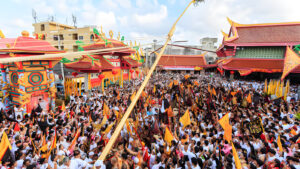
The Phuket Vegetarian Festival 2026 starts on 10 October, and knowing where to stand matters as much as knowing when. More than 40 shrines take part across the island, but a handful of places carry the week. Here is where to go for the processions, the food and the final night.
Jui Tui Shrine, the Heart of Phuket Town
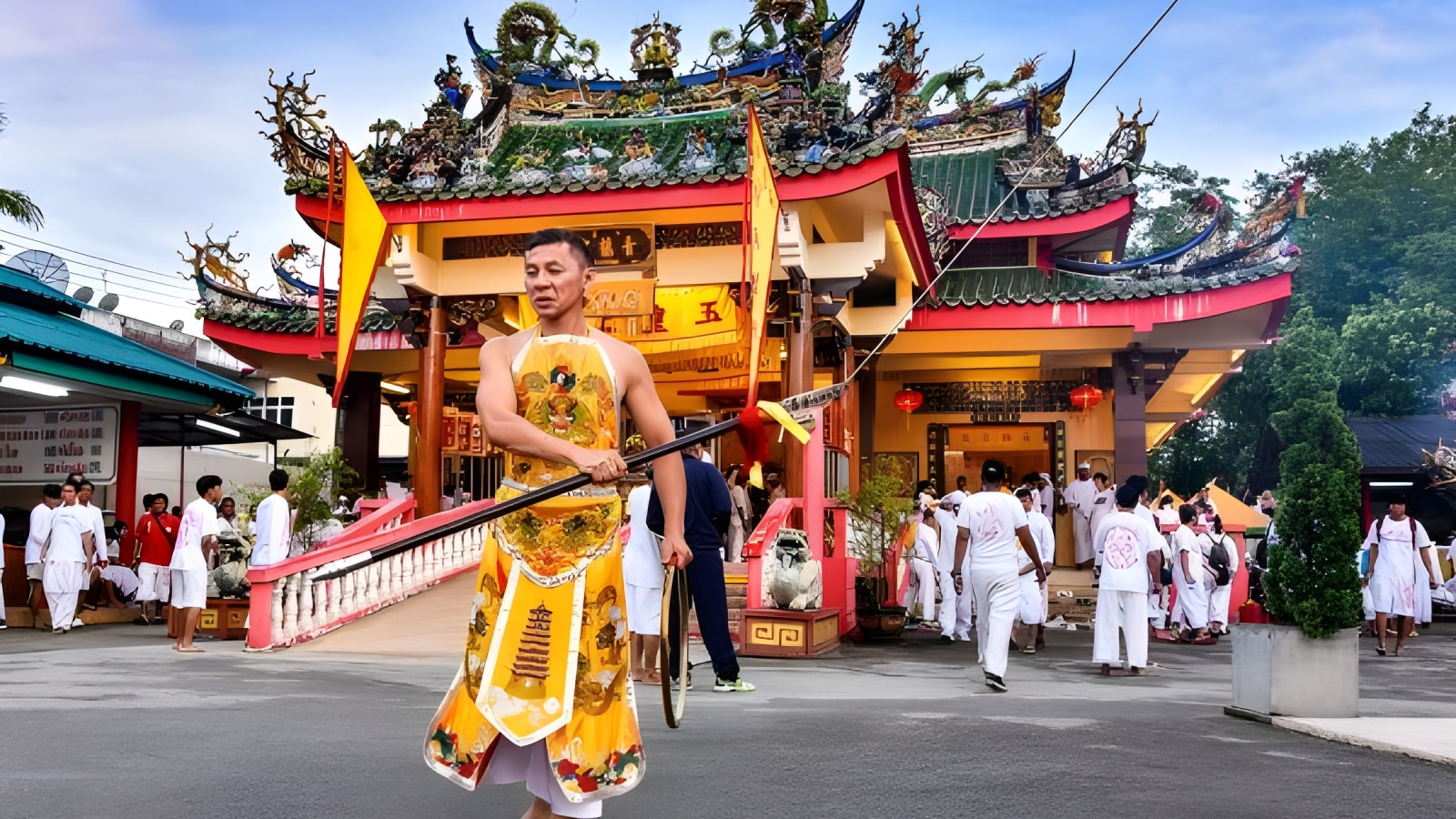
Start at Jui Tui Shrine on Soi Phuthorn, just off Ranong Road beside the old town fresh market. It is one of the oldest and most important shrines on the island, and its procession on 16 October is usually the biggest of the week. On 5 October, volunteers were already washing the courtyard and polishing the brass for the gods’ arrival.
Come early in the morning to watch devotees gather in white, and come back at night when the courtyard glows with candles and the drums start. The shrine office posts the evening programme on its notice board.
Ranong Road for Jay Food
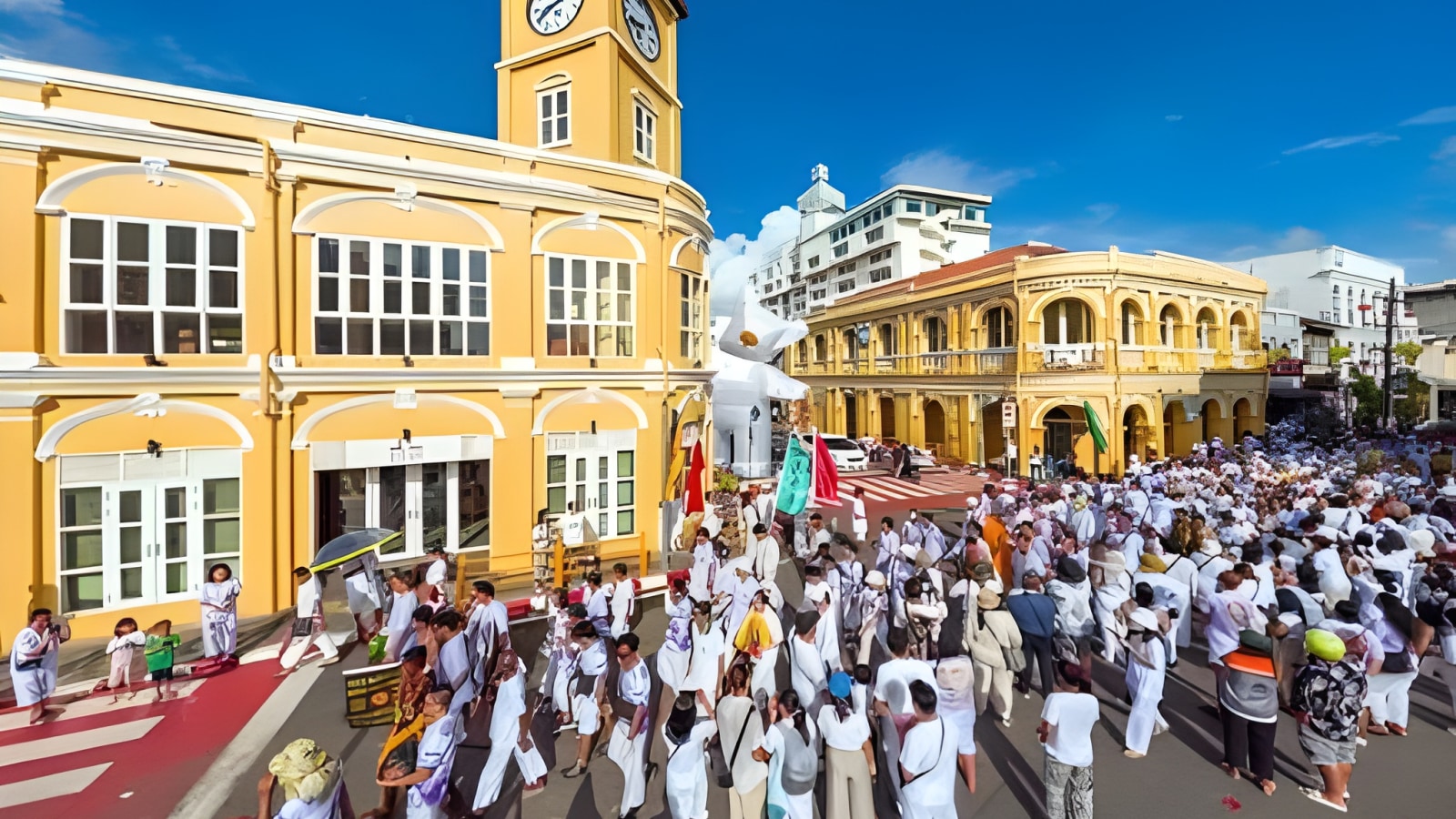
Hundreds of food stalls line Ranong Road between the Fountain Circle and Jui Tui Shrine for the whole festival. This is the place to eat. Look for the yellow flags with red characters, which mark jay food, the strict vegan cooking of the festival.
The skill is in the imitation. Cooks turn soy, gluten and mushrooms into fish balls, satay and fried chicken, alongside curries, noodles and Hokkien sweets. Stalls open from early morning, so you can eat breakfast here after a procession and come back for dinner. Bring small notes and an appetite, and try something you cannot name.
Bang Neow Shrine on Phuket Road
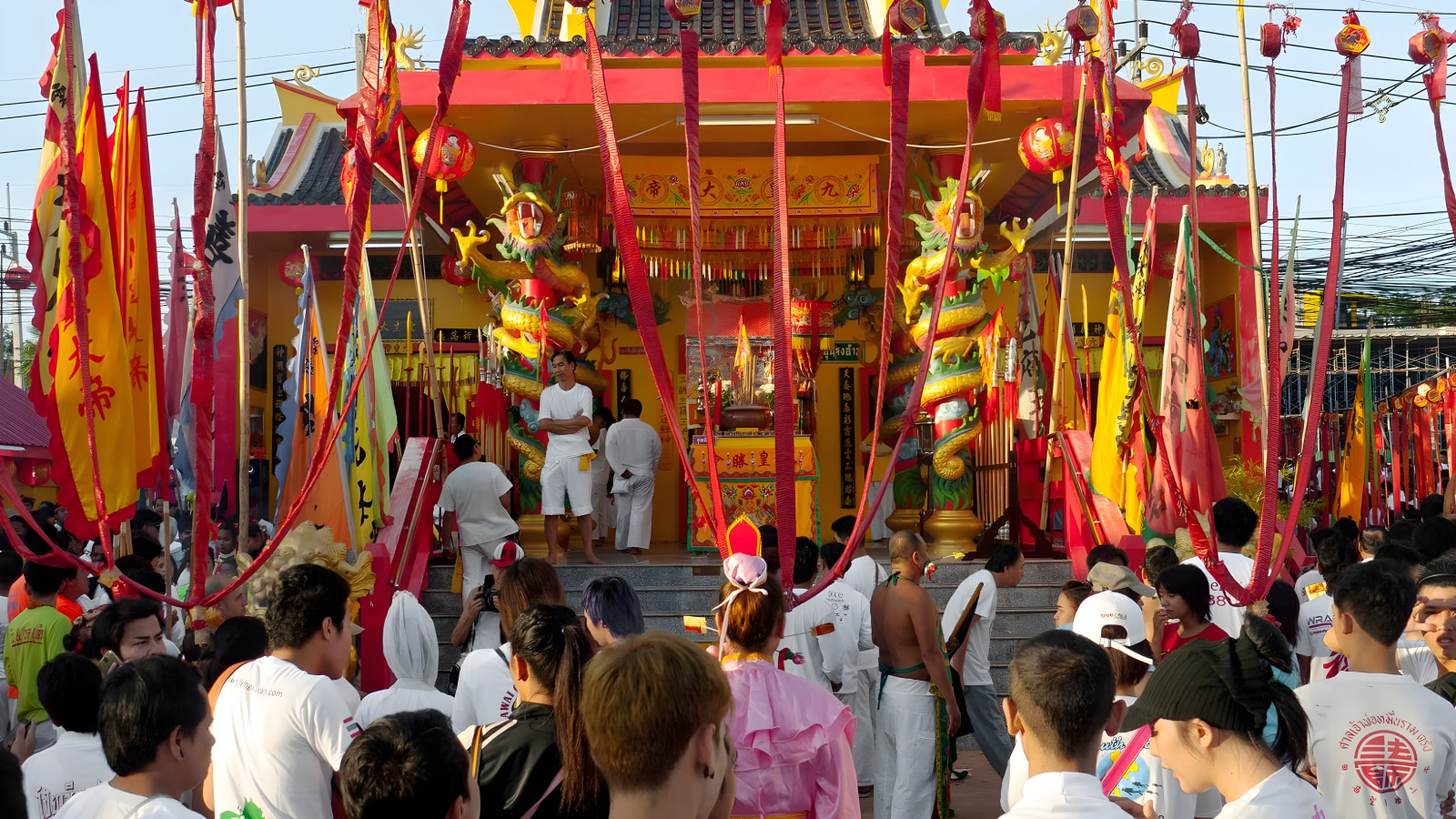
Bang Neow Shrine, on Phuket Road at the southern side of town, is one of the festival’s largest and best loved shrines. Its procession sets off early on 15 October, from around 6am. In the evenings, the courtyard hosts its share of the week’s rituals, and the stalls around the shrine are a good second stop for jay food.
It is a short walk from here to Saphan Hin, so Bang Neow makes a good base for the final night.
Sam Kong Shrine and the North of Town
Sam Kong Shrine sits in the north of Phuket Town, and its procession on 13 October winds down through the old town streets from around 7:45am. The area around the shrine fills with food stalls during the week, and it feels more local than Ranong Road. Mornings here are calm until the drums start.
Kathu Shrine, Where It All Began
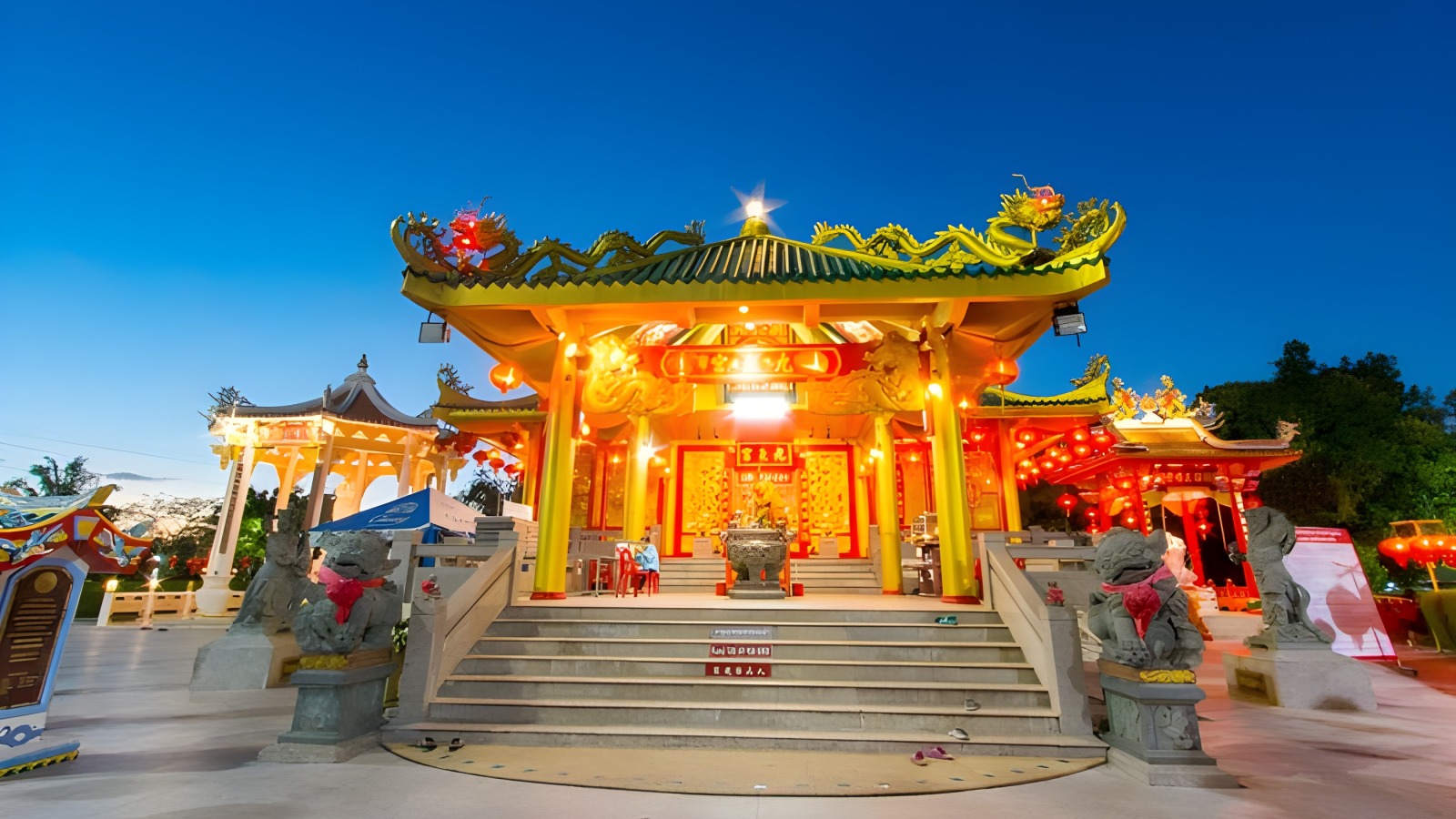
The festival began in Kathu in 1825. The story goes that a travelling Chinese opera troupe fell ill, kept a strict vegetarian diet to honour the Nine Emperor Gods, and recovered. The tradition grew from there across the island.
Kathu Shrine sits in the old tin mining village between Patong and Phuket Town. Its procession on 17 October is a long walk from Kathu into town, and its daylight fire walk on the afternoon of 18 October is a rare chance to see the ritual by day. For anyone staying in Patong, Kathu is the closest major shrine.
Cherng Talay Shrine on the West Coast
West coast residents have a festival on their doorstep. Cherng Talay Shrine, near Bang Tao, holds its procession on 15 October from around 7am, along with evening rituals during the week. It is a good choice if you are staying in Bang Tao, Laguna or Surin and want to see the festival without the drive into town.
Saphan Hin for the Final Night

Most processions end at Saphan Hin, the waterfront park at the southern edge of Phuket Town. On the night of 18 October, the last great procession carries the gods here to be sent home, and the firecrackers go on until late. It is loud and smoky, and the whole town turns out for it.
Find your spot early and keep back from the route. Wear long sleeves, long trousers and closed shoes, and bring earplugs and a mask.
The Old Town Streets
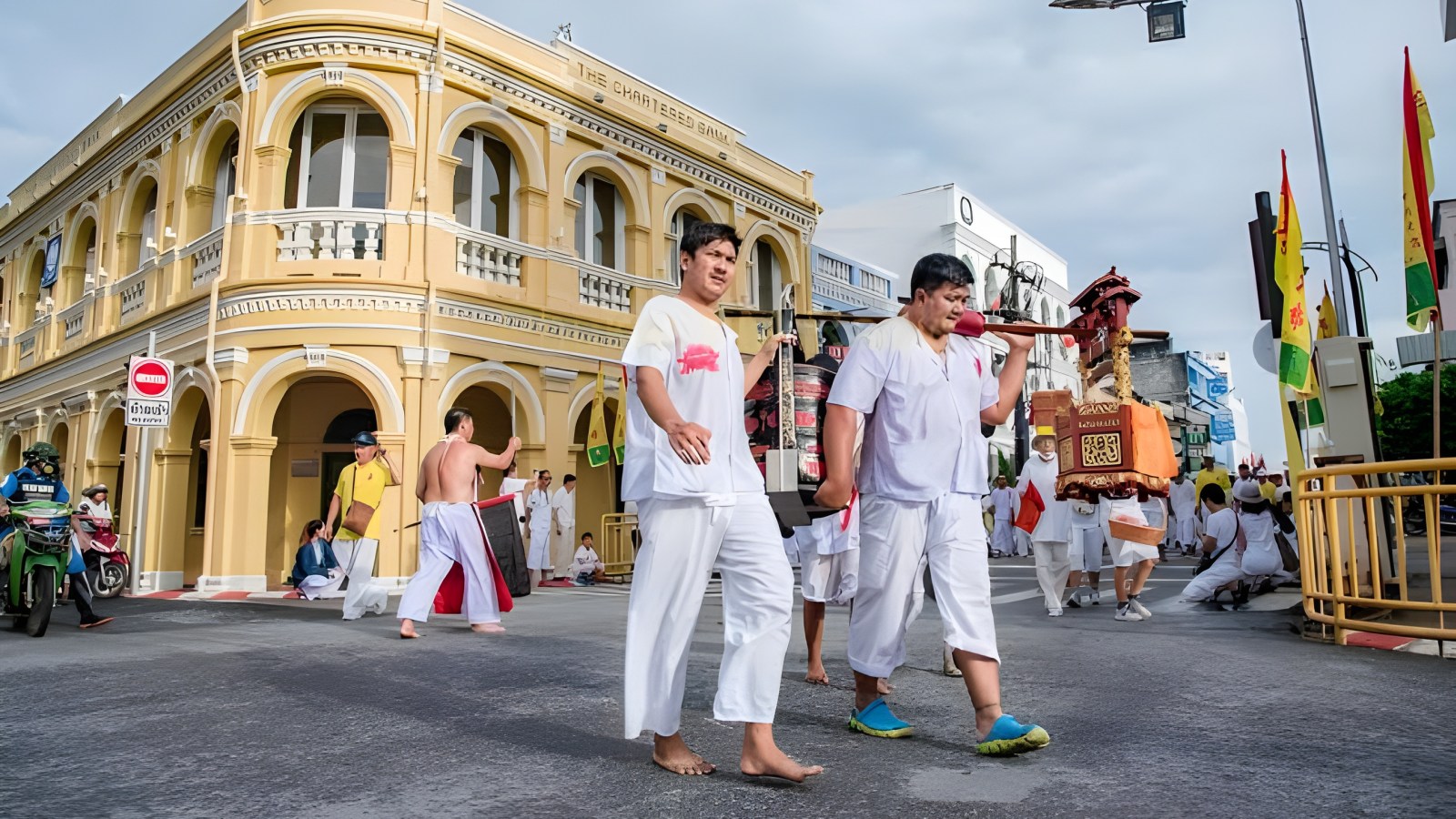
Between rituals, walk the old town. Thalang, Dibuk and Krabi Roads are hung with yellow flags and lanterns for the week, and the Sino-Portuguese shophouses look their best in the early light. Phuket became Thailand’s first UNESCO City of Gastronomy in 2015, and the festival shows you why.
The island’s whole Hokkien story is on show for nine days. Pick a shrine, wear white and follow the drums.